Planning
We define milestones, key deliverables, responsibilities, and decision points, translating them into a realistic plan.
Project Management Support
FNET supports planning, progress management, risk management, and stakeholder coordination in new product development. Drawing on the CCPM methodology cultivated through mechanical and systems development, we help shift to project operations that don't assume delays.
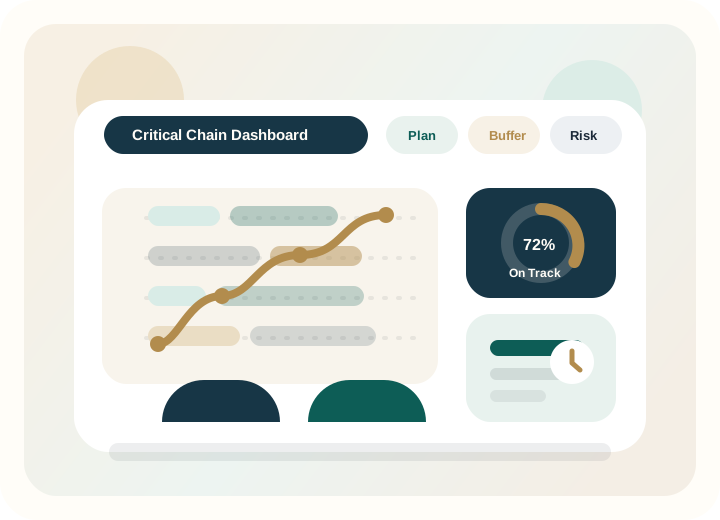
We cover the entire project lifecycle including planning, development, evaluation, and launch.
We systematically support planning, progress, risk, meeting management, and bottleneck management.
Lead time reduction, clarified priorities, and improved quality and decision-making speed.
PM Services
In development settings, insufficient information, ambiguous priorities, and simultaneous multitasking are common causes of delays. FNET creates an operational foundation that keeps projects moving through project visualization and structured decision-making.
We define milestones, key deliverables, responsibilities, and decision points, translating them into a realistic plan.
We identify early signs of delay and manage the project with a focus on critical tasks and bottlenecks.
We organize technical, schedule, quality, and procurement risks, and prepare the basis for proactive responses and decision-making.
We establish meeting formats and reporting templates to minimize gaps in understanding among internal and external stakeholders.
About CCPM
CCPM stands for Critical Chain Project Management, an approach that manages the most important chain of work and buffers while accounting for the constraints of the entire project. Rather than relying on slack in individual tasks, it shifts to operations that meet deadlines through overall optimization.
Implementation Flow
We review current planning, meeting, and progress management practices to identify delay factors and constraints.
We design the critical chain, buffers, and priorities, and integrate them into actual project operations.
While organizing early-stage challenges, we adjust meeting and progress criteria to support adoption.
We can start with an approach that structures priority and progress judgment without drastically changing your current workflow. Please share the status of your target project.
Contact Us